This article was originally published in Spanish by Panorama Acuícola Magazine in September 2026 and is reproduced here in English for our international audience.
Genetics as a strategic lever in aquaculture: moving beyond incremental gains
Aquaculture has entered a new phase of maturity. Across key sectors such as , producers are no longer focused solely on incremental operational improvements. Instead, many are beginning to ask a more fundamental question: how can genetic improvement be used as a long-term driver of performance, profitability, and resilience?
This shift reflects broader industry realities. Production systems are becoming more complex, disease challenges remain persistent, and economic pressures continue to tighten margins. In this environment, genetics is emerging as one of the few interventions that delivers cumulative, permanent gains over time.
At Xelect, an aquaculture genetic performance improvement company, we work with producers globally to design and implement breeding programmes that translate this long-term potential into commercially significant performance gains. In Latin America, where aquaculture continues to expand and modernize, genetic improvement is becoming an increasingly important tool for maintaining competitiveness and sustainability. Our experience spans across multiple species and production systems, where we develop tailored solutions aligned with each producer’s production environment, business objectives and market requirements.
From inputs to long-term value creation
Historically, much of the industry’s effort has been directed toward feed, health and environmental management. These remain critical. However, they tend to deliver gains that are variable or require continuous input.
Genetic improvement works differently. By selecting for traits such as growth, survival, disease resistance, feed efficiency, and thermal tolerance, producers can embed performance gains directly into their stock. Over successive generations, these improvements compound. This means that every new generation has the potential to outperform the last, creating lasting value that extends well beyond a single production cycle.
As a result, leading producers are increasingly viewing genetics not as a supporting tool, but as a core component of their production strategy.
From standardised genetics to tailored breeding programmes
A key evolution in recent years has been the move away from standardised, one-size-fits-all genetic solutions.
Instead, more producers are adopting tailored breeding programmes designed around their specific operating conditions, production goals and market requirements. These programmes integrate:
- Custom genomics tools developed specifically for the target population and breeding objectives.
- Bioeconomic modelling to understand the economic value of the selection traits and set breeding objects.
- Custom selection indices that maximise ROI for specific producers.
- Tailored mating plans for direct or group crosses that maximize gain whilst protecting long-term sustainability of the population
- Continuous performance measurement
- Multi-generational breeding programme design aligned with business and production objectives
- Scenario modelling and genetic simulation tools to evaluate alternative breeding strategies before implementation
This approach recognizes a simple reality: genetic progress depends on alignment with the production environment and the commercial goals of the breeder. What works in one region, species or system usually does not translate directly to another.
For example, breeding objectives for Ecuadorian shrimp producers differ significantly from those of Chilean salmonid producers or Brazilian tilapia operations. Even within the same species, breeding priorities can vary considerably between regions; the traits valued by shrimp producers in Ecuador may differ from those prioritized by producers in Asia due to differences in farming systems, environmental conditions, disease pressures and market requirements. Tailoring selection goals to local production challenges is therefore essential for maximizing the commercial value of the genetic gains.
Increasingly, breeding programme managers are using simulation tools to test different breeding scenarios before making long-term investments. By modelling factors such as selection intensity, sib-testing strategies, pedigree vs genomic selection, trait weighting and population structure, producers can identify the most effective pathway to achieve their breeding objectives while balancing cost, risk and expected genetic gain.
The most successful programmes are those that are co-developed with producers and evolve alongside their business. This collaborative approach is central to how modern breeding programmes are designed, with closer integration between producers, geneticists, and data-driven decision-making.
The growing role of genomics
Genomic technologies are playing an increasingly important role in enabling this shift.
By providing deeper insight into the genetic potential of individual animals, genomics allows producers to:
- Increase selection accuracy, especially for complex traits or traits that cannot be measured directly on candidate broodstock
- Accelerate genetic gain
- Manage inbreeding more effectively
Importantly, genomics is no longer limited to large-scale programmes. Advances in technology and workflow design are making it more accessible and relevant across a wider range of operations.
The focus is also shifting away from viewing genotyping as a standalone service, and toward integrating it as part of a broader breeding and decision-making framework.
Industry implications for Latin America
These trends are particularly relevant for Latin American countries, where aquaculture continues to expand rapidly and diversify.
The region is home to some of the world’s most dynamic aquaculture industries, including Ecuador’s globally significant shrimp sector, Chile’s established salmon farming industry and rapidly growing tilapia production across countries such as Brazil, Colombia, Honduras and Mexico.
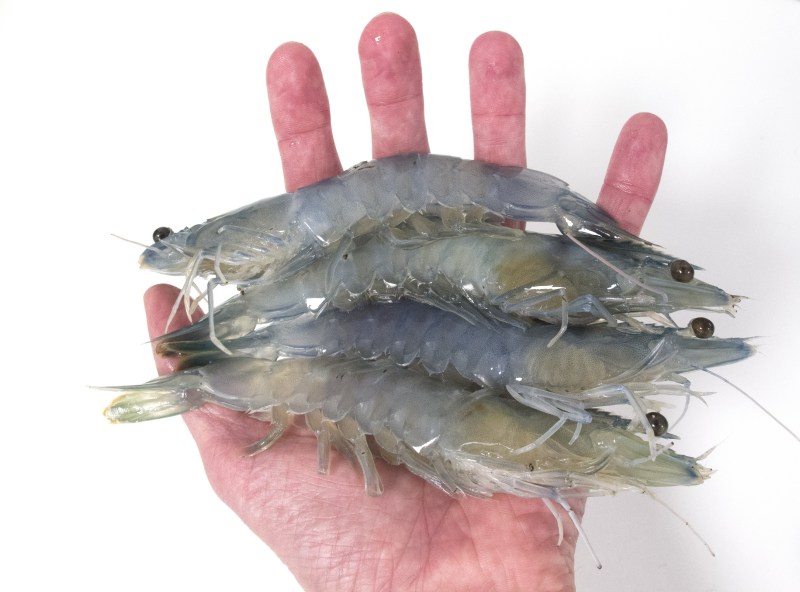
In shrimp, for example, producers in markets such as Ecuador are scaling production while managing increasing biological and environmental risk. At the same time, there is growing interest in structured breeding, genomic tools and improved broodstock strategies.
Similar trends are being observed in salmonid and tilapia production, where producers are seeking ways to improve biological performance, strengthen disease resilience and achieve more predictable production outcomes.
The opportunity is significant. By integrating genetics more systematically into production, producers can:
- Improve consistency across breeding cycles
- Reduce variability and production risk
- Enhance resilience to disease and environmental stress
- Strengthen long-term competitiveness
- Improve feed conversion and overall production efficiency
- Support sustainability objectives through more efficient resource utilization
Looking ahead
Genetics is becoming an increasingly central component of modern aquaculture production, shaping not only how animals perform today, but how production systems evolve over time.
For producers considering this shift, the key is not simply adopting new tools, but taking a strategic, long-term approach to genetic improvement.
As Latin America’s aquaculture industry continues to evolve, the producers that successfully integrate genetics into their business strategy will be best positioned to improve productivity, manage risk and create sustainable growth over the long term.
In the next article, we will explore how these principles are being applied in practice, with a closer look at the role of genomic technologies across different species and production systems.