This article was originally published in Spanish by Panorama Acuícola Magazine in October 2026 and is reproduced here in English for our international audience.
Unlocking the full potential of shrimp genomics: from complexity to practical application
The global shrimp industry has achieved remarkable growth over the past two decades, supported by continuous advances in nutrition, health management, and production practices. As producers look for new opportunities to improve performance, resilience, and efficiency, increasing attention is turning towards genetic improvement and the role of genomics in accelerating breeding progress.
Genomic technologies have transformed breeding programmes across livestock and aquaculture by providing a more detailed understanding of the genetic factors that influence performance. For shrimp producers, these technologies offer the potential to improve selection accuracy, accelerate genetic gain, and support the development of more robust and productive populations.
Shrimp breeding programmes can already deliver high rates of genetic gain through mass selection and classical pedigree-based approaches, particularly because very large numbers of broodstock candidates can be reared together, enabling high selection intensity. The value of genomics becomes particularly important when key commercial traits cannot be measured directly on future broodstock and must instead be evaluated through sib testing. Examples include disease resistance in SPF production systems, performance traits in exposed production systems where shrimp cannot be returned to the hatchery for broodstock selection due to distance or logistical constraints, and flesh quality traits under both SPF and exposed production systems. In these cases, genomic information increases selection accuracy by helping breeders identify which candidates carry the genetic potential for traits expressed in their relatives, translating more reliable selection decisions into faster and more predictable genetic gain.
Today, advances in genomic technologies are creating new opportunities for breeding programmes to make more effective use of genetic information and translating it into practical breeding decisions.
Why genomics matters in shrimp breeding
Traditional selective breeding relies on measuring performance and selecting the best animals as parents of the next generation. This approach has delivered substantial improvements in growth, survival, and production efficiency across many aquaculture species.
However, some of the most commercially important traits are difficult or expensive to measure directly. Disease resistance, for example, often requires challenge testing under SPF systems, while traits related to robustness, stress tolerance, or environmental adaptation may only become apparent under specific production conditions.
By examining thousands of genetic markers across the genome, genomics provides breeders with an additional source of information that can improve selection accuracy and provide greater insight into an animal’s genetic potential. This allows breeding decisions to be based not only on observed performance but also on the genetic merit likely to be passed on to future generations.
The challenge: diversity and fragmentation
Despite the high market value, shrimp genomics has seen relatively limited penetration of sophisticated genomics technologies relative to other cultured aquatic species such as Atlantic salmon.
Whiteleg shrimp (Litopenaeus vannamei) is one of the most globally distributed aquaculture species. Over time, breeding populations have been established in many regions, which present different breeding objectives and a diverse global landscape. Breeding programmes in Ecuador may prioritise different traits from programmes in Asia, while environmental conditions, disease pressures, farming systems and market requirements can all influence selection decisions.
As a result, genomic tools developed for one population do not always perform equally well in another. This challenge has slowed the adoption of some genomic technologies because producers increasingly require solutions that can operate consistently across diverse populations and production environments.
Why marker density matters
Not all genomic tools provide the same level of information. An important factor influencing the usefulness of a genotyping platform is the number and distribution of genetic markers it contains.
Single nucleotide polymorphisms (SNPs) act as signposts across the genome, helping breeders identify genetic differences between individuals. Historically, lower-density marker panels have been valuable for applications such as parentage assignment, pedigree reconstruction, and population management. These tools have played an important role in introducing genomics into aquaculture breeding programmes and remain useful for many applications.
However, as breeding programmes become more sophisticated, the demands placed on genomic tools are increasing. Applications such as genomic selection, genome-wide association studies (GWAS), inbreeding management and the analysis of complex traits require much higher levels of genomic resolution and more sophisticated selective breeding approaches such as Optimum Contribution Selection.
Higher-density marker platforms can improve genome coverage, increase the ability to detect variation associated with economically important traits, and provide greater flexibility across a range of breeding applications.
The number and distribution of markers directly influence how much genetic variation can be captured across a population. In shrimp, where breeding populations often have different genetic backgrounds and selection histories, broader genomic coverage can improve the usefulness of a genotyping platform across diverse populations and production systems.
Ultimately, the objective is not simply to generate more data, but to provide breeders with more informative data that supports better breeding decisions and long-term genetic progress. These requirements have driven the development of high-density genotyping platforms capable of providing the genomic resolution needed for modern shrimp breeding programmes.
Why genomic selection is becoming feasible in shrimp
The concept of genomic selection has been discussed in aquaculture for many years, but its application in shrimp breeding programmes has been limited.
Several factors have contributed to this. The availability of suitable genomic tools, the cost of generating genomic data, the time required for the genotyping process, and the computational challenges associated with analysing large datasets. The turnaround time from genotyping providers is particularly important in shrimp breeding programmes, where short generation intervals require genomic information to be delivered rapidly enough to support time-sensitive selection and mating decisions.
Recent advances are helping to overcome these challenges. Improvements in sequencing technologies, bioinformatics pipelines, and genotyping platforms have reduced costs while increasing the quality and scale of genomic information available to breeders. At the same time, greater industry investment in structured breeding programmes has resulted in larger datasets linking genomic information to commercially important traits. Together, these developments are making genomic selection increasingly practical within commercial shrimp breeding programmes, allowing breeders to incorporate genomic information into selection decisions and identify superior breeding candidates with greater accuracy.
Together, these developments are creating the conditions necessary for genomic selection to become increasingly practical within commercial shrimp breeding programmes. Rather than relying solely on observed performance, breeders can now begin incorporating genomic information into selection decisions, helping to identify superior breeding candidates with greater accuracy and potentially accelerating genetic gain across generations.
As genomic tools become more accessible and cost-effective, the focus is shifting towards practical implementation and identifying where genomic information can deliver the greatest value within commercial breeding programmes.
Advances in genomic tools for shrimp breeding
As genomic technologies have matured, considerable effort has been directed towards developing tools that better meet the needs of commercial shrimp breeding programmes.
One area of focus has been the development of high-density genotyping arrays. These platforms are designed to capture genetic variation across a larger proportion of the genome, providing the resolution required for applications such as genomic selection, parentage assignment, population management and genome-wide association studies (GWAS).
One example of this trend is the development of 60K high-density SNP arrays for whiteleg shrimp. These platforms are designed to provide the genomic resolution required for advanced breeding applications while maintaining applicability across diverse breeding populations.
The significance of these developments lies not simply in generating larger genomic datasets, but in enabling breeders to make more informed decisions. As genomic information becomes increasingly integrated into breeding programmes, high-density genomic tools are helping support more accurate selection, improved management of genetic diversity, and the long-term sustainability of breeding populations.
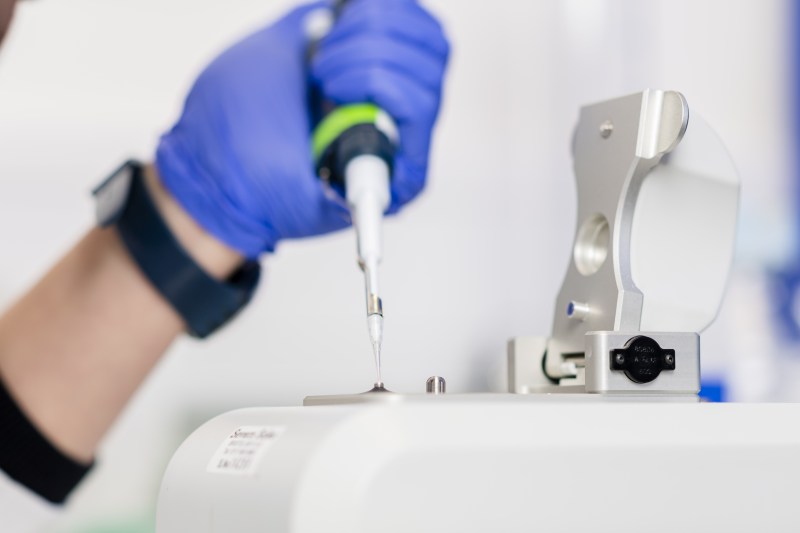
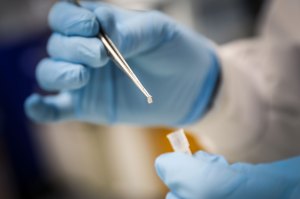
Careful DNA quality control ensures the accuracy and reliability of modern genomic analyses
Case Study: Developing a 60K SNP array for whiteleg shrimp
One challenge in shrimp genomics is the genetic diversity that exists across global breeding populations. As a result, genomic tools developed for a single population may not deliver consistent performance when applied across different breeding programmes.
To address this, Xelect developed a 60K high-density SNP array for Litopenaeus vannamei using genetic information from a broad range of populations. The objective was to create a robust genomic platform capable of supporting the current requirements of modern shrimp breeding programmes, including parentage assignment, population management, genomic selection, and genome-wide association studies across diverse genetic backgrounds. In addition, the array provides a valuable reference resource for genotype imputation, enabling low-density genotypes collected at scale to be accurately imputed to high-density marker sets. This approach offers a cost-effective pathway to expand the use of genomics throughout the breeding population while retaining the benefits of high-resolution genomic information.
The array reflects a broader trend in aquaculture genetics towards genomic platforms that not only satisfy current genomic selection requirements but also future-proof breeding programmes against emerging technological developments. As genomic technologies, analytical methods, and AI-driven prediction tools continue to evolve, access to high-quality, high-density genomic data will become increasingly important for unlocking additional genetic gain and maintaining long-term breeding programme competitiveness.
Relevance for Latin American producers
Latin America is home to some of the world’s most successful shrimp industries, with Ecuador in particular establishing itself as a global leader in shrimp production and exports.
An example of this environmental variability is the El Niño Southern Oscillation (ENSO), which is characterised by alternating El Niño and La Niña phases and represents one of the major environmental drivers affecting shrimp production across Latin America. El Niño events are typically associated with warmer water temperatures, altered salinity profiles, increased rainfall, flooding events, and changes in disease dynamics, while La Niña conditions often result in cooler temperatures, slower growth rates, extended production cycles, and different disease challenges. Together, these cyclical climate fluctuations can have significant impacts on growth, survival, health, and overall production performance. While moderate El Niño events may enhance growth through elevated temperatures, both El Niño and La Niña can increase production risks by creating environmental instability and changing pathogen pressures. These fluctuations highlight the importance of breeding programmes capable of identifying and selecting animals that consistently perform well across a wide range of environmental conditions, thereby improving resilience and production stability in the face of increasing climate variability.
In this context, high-density genomic platforms offer value beyond their current use in genomic selection. A 60K SNP array provides the genomic resolution required to investigate genotype-by-environment interactions, identify genomic regions associated with resilience to environmental stressors, and improve the prediction of performance under variable production conditions.
Looking Ahead
Shrimp genomics is entering a new phase of commercial maturity. Advances in sequencing, bioinformatics and genotyping technologies are making it increasingly practical to integrate genomic information into breeding programmes and selection decisions.
For producers in Latin America, these developments create new opportunities to improve breeding programme performance, strengthen resilience, and support long-term competitiveness. As genomic tools continue to evolve, the greatest benefits will come from their integration within well-designed breeding programmes that align genetic improvement with business objectives.
Ultimately, the value of genomics lies not in the data itself, but in the decisions it enables. As genomic tools continue to evolve, producers that successfully integrate genomic information into long-term breeding strategies will be best positioned to accelerate genetic gain, improve resilience and build sustainable competitive advantage.