
As aquaculture breeding programmes generate ever increasing amounts of genetic, phenotypic and operational data, the ability to transform this information into actionable insights is becoming increasingly important. Digital tools help breeding teams monitor genetic progress, improve programme visibility and make better-informed decisions across the breeding cycle.
To support its continued investment in digital innovation, Xelect has promoted Max Coulter to the role of Senior Scientific Software Engineer.
In his new position, Max has taken formal responsibility for driving Xelect’s digital capabilities, supporting the company’s mission to help customers achieve higher rates of genetic gain, improve programme visibility and optimize efficiency through better data management and analytics.
“Digital tools are now fundamental to modern breeding programmes,” says Dr Mark Looseley, Head of Genetics at Xelect. “They help turn complex datasets into clear insights that breeding teams can act on, improving decision-making and delivering value for customers.”
Building the digital foundations
Since joining Xelect four years ago, Max has played a pivotal role in developing the software infrastructure that underpins many of the company’s breeding and data management activities.
His contributions include the development of Xelect’s in-house database framework, the launch of LiveMate, and the creation of customer dashboard technologies that are scheduled to be rolled out later this year.
These platforms help streamline the flow of information across breeding programmes while making complex genetic and operational data more accessible to both customers and internal teams.
What will be your priorities as Senior Scientific Software Engineer?
Max: “My previous work has primarily focused on Xelect’s core software systems, including our custom databases, our bespoke selective breeding software range, including OptiMate, and high-density genotype processing.
Going forward, I will be placing greater emphasis on automation across our breeding and genetic analysis pipelines. This includes expanding our dashboards for more advanced customer-facing data capture and reporting.
Ultimately, the goal is to make data more accessible and actionable, improving visibility and supporting better decision-making.”
You’ve been involved in developing Xelect’s internal database, LiveMate and a range of other digital tools. Looking back, which project are you most proud of and why?
Max: “The development of OptiMate, particularly its group optimisation capabilities for mating and breeding decisions, stands out as one of the projects I’m most proud of. Optimisation has always been fundamental to our breeding programmes, and I believe our approach is unique within the industry.
When I joined Xelect, I was tasked with improving the performance of an already highly flexible optimisation algorithm. By significantly increasing its speed and efficiency, we were able to reduce processing times from days to seconds or minutes. This not only improved our existing capabilities, but also laid the groundwork for innovations such as LiveMate, which continues to streamline and enhance the mating plan generation process.”
Delivering value from better breeding decisions
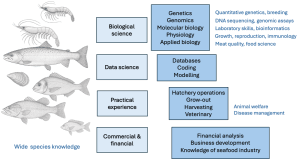
As breeding programmes become more sophisticated, software engineering is increasingly intertwined with genetics, data science and breeding operations.
Digital platforms help breeding teams monitor genetic progress, manage large datasets, track programme performance and provide customers with greater visibility into the status and outcomes of their breeding programmes.
Max’s new role reflects the growing importance of these capabilities within Xelect’s long-term strategy.
How do digital tools help customers achieve better breeding outcomes?
Max: “Data visibility is everything. Particularly as breeding programmes mature, the volume and complexity of data can quickly become overwhelming, even for experienced teams. Effective digital tools help make that information easier to understand, enabling faster identification of trends, issues and opportunities.
Perhaps most importantly, they help connect genetic progress with real-world production and financial outcomes. By linking breeding decisions to on-farm performance, customers can better understand the value their breeding programme is delivering and make more informed decisions about future investments.”
What excites you most about the customer dashboards being launched later this year?
Max: “I want to help both ourprogramme managers and customers gain insights more quickly and with less effort. By improving visibility and surfacing important information sooner, dashboards can help identify potential issues earlier, support better decision-making and ultimately create more value.At the same time, they reduce the amount of manual effort requiredto access and interpret key programme data.”
Collaboration across Xelect and Genus
As part of Genus, Xelect has access to a broader network of specialists spanning software engineering, data science, breeding technology and informatics.
In his new role, Max is working more closely with colleagues across the Genus research and development teams to share expertise, identify opportunities for collaboration and accelerate the development of digital tools that support breeding programmes.
How does being part of the wider Genus group help accelerate innovation at Xelect?
Max: “Genus has already gone through many of the digital transformation challenges that Xelect is now addressing, so there is a great deal we can learn from their experience. The collaboration has also provided valuable infrastructure and technical support that has helped make innovations such as LiveMate possible. As we continue to develop new tools and platforms, having access to that broader expertise will help us move faster and deliver more value to customers.”
This collaborative approach has been recognised by colleagues across the wider Genus group.
“What sets Max apart is his ability to connect technical innovation with customer needs, ensuring that new capabilities translate into meaningful business outcomes. Through close collaboration across software engineering, DevOps, security, and deployment capabilities, he has helped deliver platforms such as LiveMate and is helping shape the next generation of data-driven tools for aquaculture breeding. His leadership in fostering collaboration across teams has strengthened Xelect’s digital capabilities and created solutions that provide a clear competitive advantage for our customers.”
– Travis Frosch, Genus R&D, Senior Director of Scientific Informatics and Biosystems Engineering
Looking ahead
As breeding programmes become increasingly data-driven, digital tools will play an ever more important role in helping customers understand, manage and optimise genetic improvement.
For Max, the opportunity lies not just in collecting more data, but in making that data more accessible, actionable and valuable for breeding decisions.
Where do you see the biggest opportunities for data and software innovation in aquaculture breeding over the next five years?
Max:“Artificial intelligence and machine learning are becoming increasingly important for phenotyping in commercial production environments. Technologies such as underwater cameras, computer vision and AI have the potential to capture phenotypic information automatically and in real time, providing richer datasets while reducing manual effort.
The future is not simply about collecting more data; it’s about creating systems that make it easier to translate that data into better breeding outcomes.”
As Senior Scientific Software Engineer, Max will play a central role in shaping the next phase of Xelect’s digital capabilities. From breeding programme optimisation and data management to customer dashboards and emerging AI-driven technologies, his work will help ensure that increasingly complex datasets are translated into practical insights that deliver measurable value for customers.
As aquaculture breeding programmes continue to evolve, Xelect’s investment in digital innovation reflects a simple objective: helping customers make better breeding decisions, faster, and achieving greater genetic and commercial gains as a result.