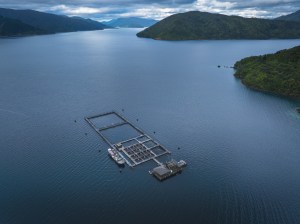

Farmed salmon species constitute one of the most widely eaten and profitable seafoods globally. There are around 2.5 million tonnes of Atlantic salmon produced each year together with lesser amounts of the Pacific species.
Recently, Field & Flower joined Abel & Cole in announcing that they have stopped sourcing salmon from open offshore net pen producers in favour of land-based suppliers citing concerns around poor animal welfare and adverse environmental impacts. Concerns around preserving wild fish stocks led regulators in Washington State, USA to ban net pen farming whilst neighbouring British Columbia, Canada will start phasing it out from 2029. Other groups in the media have criticised land-based Recirculating Aquaculture Systems (RAS) as “factory farming”, arguing that this may raise animal welfare concerns.
Debate around salmon farming methods has intensified in recent years, often reflecting broader societal concerns about how we produce food at scale. As with most complex systems, different production models involve trade-offs rather than simple good-versus-bad choices. These system‑level challenges are part of a broader discussion around how aquaculture can scale responsibly, a theme explored in an earlier article on making aquaculture more sustainable.
This post examines the scientific evidence for and against these opposing and often controversial claims around land-based and net pen salmon farming. This post is intended to inform discussion rather than promote a specific production system.
Environmental concerns
Environmental impact is one of the most frequently cited arguments in discussions about salmon farming methods.
Potential adverse environmental impacts of net pen farming include the discharge of untreated waste products, uneaten food, antifouling chemicals, microplastics and medicines into the surrounding ocean. Critics claim that an open net pen fish farm producing 3,000 tonnes of salmon releases unfiltered effluent equivalent to the sewage production of a small city of 50,000 people. Waste discharge typically results in low oxygen conditions and changes to the chemical composition of seawater beneath and downstream of the net pens to the detriment of marine biodiversity. To mitigate these impacts, regulators require an extensive environmental impact study prior to granting consent for the farm with subsequent monitoring of ongoing operations with penalties for breaches of licence conditions. Periodically, net pens are fallowed which leads to a gradual recovery of the faunal composition on the seabed. Pressure from lobby groups for ever stricter regulations ensure that policies are kept under constant review as politicians and civil servants attempt to balance the proven economic and societal benefits of salmon farming against the environmental impacts (e.g. see recent news items from Scotland, Norway, and Australia). The rapid uptake of decentralised data systems with multiple sensors on each net pen is likely to greatly facilitate environmental and husbandry reporting in the future. The environmental debate around salmon farming could only benefit from the transparent sharing of data between companies, regulators and the public. It is worth noting that land-based fish farms are not immune from pollution concerns either. Recently, the Norwegian Environment Agency (Miljødirektoratet) reported that 68 of 77 sites inspected in 2024 had violations ranging from inadequate discharge control to poor internal oversight.
Farmed salmon have a reportedly lower carbon footprint than most non-marine protein sources such as beef, lamb, and pigs. Net pen farms tend to be located near to remote rural locations and are transported to processing plants in well boats and lorries and exported worldwide by air freight which adds to greenhouse gas emissions. Land-based farms built close to major cities have higher energy usage but could potentially have lower climate impacts overall. For example, Proximar, the Norwegian seafood company has built a land-based farm near Mount Fuji in Japan with biomass expected to reach 2,000 tonnes by the end of 2025. The plan is for salmon to reach their end market in Tokyo the same day as harvesting, i.e., super fresh seafood produced with the lowest possible carbon footprint from transportation.
Poorly maintained net pens coupled with damage due to storms inevitably leads to the accidental release of salmon. Farmed salmon potentially compete for food and habitats with wild salmon whilst spreading disease and parasites, particularly sea lice. The domestication of farmed salmon over more than 12 generations has reduced genetic diversity whilst modifying the genome through inadvertent selection and selective breeding. Inadvertent selection reflects adaptations to the captive environment and includes surface feeding behaviour and weakening of the startle response making fish more vulnerable to predation in the wild. Interbreeding between farmed and wild salmon is therefore undesirable as it potentially reduces fitness and has been linked to the decline of wild populations.
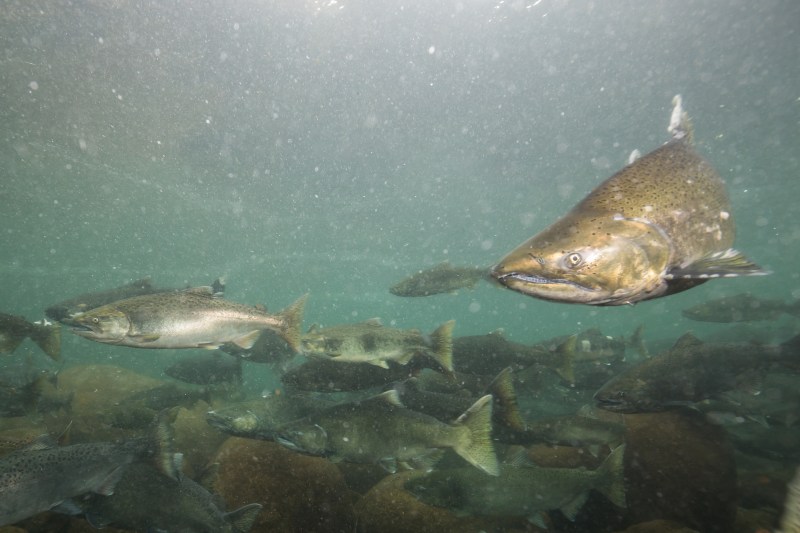
Fig 1. Wild salmon during spawning season in a British Columbia river.
It has been estimated that wild Atlantic salmon populations in Norway have declined by 50% since the 1980s and the estimated 300,000 escapees from fish farms each year is considered to be one of the contributing factors. To assess the extent of the problem, researchers in Norway have recently developed a method for reliably distinguishing between farmed and wild salmon from images of scales. A convoluted neural network was trained with almost 90,000 salmon scales of known origin from fish farms and archives covering hundreds of rivers and time series dating back to the 1930s. Growth rings on the scales are relatively uniformly spaced in the case of farmed salmon whereas on wild salmon they are much more irregular, reflecting more pronounced seasonal differences in growth rate due to variations in temperature, prey abundance and migration. Complementary genetic analysis has shown that half of 150 wild salmon populations in Norway have some genetic signature of inbreeding with farmed fish. Introgression averages around 6.4% with much higher point values (studies reviewed here).
Potential methods for mitigating the impacts of escapees include better design and citing of net pens, regulatory measures such as monitoring and fining companies for accidental releases, and sterility. Farming trials with triploid salmon which are sterile have identified both performance and welfare issues in seawater, so this is unlikely to be the solution. Genetic engineering or RNA interference has been used in laboratory studies to disrupt genes required for germ cell formation in diploids such as dead end. However, substantial regulatory barriers and technical issues related to the reliability and/or safety of these technologies will need to be overcome before they can be used commercially, so they are a medium to long term solution to sterility at best. Land-based salmon farms eliminate the problem of escapees and in this respect have an advantage.
Overall, environmental outcomes appear to depend as much on monitoring, regulation, and local conditions as on the production system itself.
Animal Welfare Concerns
Animal welfare issues with net pen farming revolve around high seawater mortality and diseases. In Norway, 62.8 million salmon died in net pens in 2023, a mortality rate of 16.7%. Average mortality rate is broadly similar in Scotland but was only 6.8% in the Faroe Islands. Major causes of mortality include sea lice, bacterial infections that cause winter sores, viral pathogens, jelly fish and algal blooms. The concerns of governments and the public in this area are certainly shared by production companies, not least because of their impact on profitability. It is not in the commercial interests of companies to feed fish and have them die prematurely nor to suffer losses due to disease. Enormous efforts are therefore being made to address these issues through research and innovation. Solutions include the development of vaccines, selective breeding for disease resistance, the use of cameras and AI for the early identification of health issues, and the stocking of pens with larger smolts which spend less time at sea. So-called “cleaner fish” species are also used to feed on the sea lice. Mowi recently announced the end of lumpfish use as cleaner fish in Scotland in favour of Ballan wrasse, citing their greater effectiveness, with fewer welfare and environmental concerns. Reported mortality rates in some RAS salmon farms are lower, e.g. Salmon Evolution are targeting 3-5% in their facilities, although performance varies by facility design and management.
High welfare requires good health and nutrition, an ability to express natural behaviours, freedom from harmful experience and pain, and a captive environment that is not in itself stressful. There is a large body of academic research on the physiological and behavioural parameters that can be used as welfare indicators (some examples can be found here). Growth itself provides an integrated measure of wellbeing as it is negatively impacted by ill health and stress. It is worth noting that whilst net pen and land-based salmon farming have different impacts on welfare, both are associated with high rates of growth. The procedures required to ensure the humane harvesting and slaughter of salmon are well known, generally implemented and monitored through certification bodies. Recently electric stunners have been introduced to the market which can render fish unconscious in less than 1s whilst still in water to reduce stress during the culling process.
On rare occasions poor management oversight has led to acts of cruelty by individual employees which tarnish the image of the industry. Some examples close to home: in November this year the supermarket Tesco suspended the supply of salmon from a farm in North West Scotland when it was discovered that sea lice infected fish were left in a pen meant to be empty which caused unnecessary suffering. Earlier in the year videos recorded by an animal rights group at another fish farm in Scotland allegedly showed 18 instances of cruelty leading to its suspension from the RSPCA (Royal Society for Prevention of Cruelty to Animals) welfare scheme. Instances of cruelty are uncommon and must be strongly condemned, but they are not confined to salmon farming. In all cases responsibility lies with management to ensure appropriate recruitment, training and oversight of all employees involved with animal welfare.
Conclusions and Final Thoughts
The best way to ensure high welfare standards and minimal environment impacts is through cooperation between all stakeholders: governments, certification bodies and the commercial sector. Advances in technology now enable a plethora of welfare and environmental parameters to be monitored in real time to ensure compliance with regulations and best practice more generally. It would be desirable to reach a consensus on a core set of environmental and welfare parameters. The sharing of data and experiences in these areas would only benefit industry as a whole and provide assurance to the public that their food is being ethically and sustainably produced. Regulatory bodies and certification schemes have a critical role in this respect and have proven to be effective. Just this month, the Norwegian Food Safety Authority, Mattilsynet, issued a net pen farm notice of the withdrawal of their operating license because of serious breaches of regulations covering fish welfare, animal health and site biosecurity.
Large scale aquaculture is a relatively new industry, but it has an important role to play in future food security, and it is here to stay. In some respects, land-based salmon farming has advantages relative to traditional net pens, e.g., lower mortality rates and proximity to markets. RAS technology is still evolving and would benefit from further research into areas such as the effects of environmental enrichment on fish behaviour and wellbeing. Selective breeding programmes targeting traits of importance to RAS systems would also be beneficial.
Finally, it is worth pointing out that land-based farming of Atlantic salmon is only at the very start of its commercial journey and still at the investment stage with total global production comprising a few tens of thousands of tonnes each year. In contrast, net pen production of Atlantic salmon reached 1.4 million tonnes for the first six months of 2025. Notwithstanding continued interest and investment, land-based farms will not replace traditional net pens anytime soon. Whilst there is no room for complacency, continued innovation, transparency, and shared learning across production systems offer a clear pathway to higher welfare and lower environmental impact over time.