
Aquaculture has become an integral part of the food supply system providing high-quality protein to a growing population. It supports UN Sustainable Development Goals: 1 (No Poverty) and 2 (Zero Hunger). Underlying its importance is the statistic that 57% of all fisheries production came from aquaculture in 2020. To ensure its continued success in a rapidly changing world, we need aquaculture to become more sustainable along with all other human activities. In simple terms sustainability means being able to meet our current needs without compromising the ability of future generations to meet theirs. Trade-offs between complex and interrelated environmental, economic and social factors have a sweet spot that represents sustainability (Fig. 1).

Fig. 1 Sustainable aquaculture needs to look after resources and environmental assets in such a way as to preserve their value for current and future generations whilst also providing for economic development and a healthy society.
Unfortunately, there is no single roadmap to greater sustainability because aquaculture is just so diverse with respect to culture methods, species, geography and the uptake of technological innovations. It is also necessary to consider all aspects of aquaculture’s complex supply chain including feed manufacture, waste disposal, cold storage and transport of product to market. Tilapia, salmon and trout, and marine shrimps are particularly significant when thinking about global aquaculture sustainability because they are the most highly produced and traded commodity species.
The sustainability record of aquaculture is often criticised for habitat loss, environmental degradation, pollution, poor animal welfare and for its contribution to climate change. Adverse societal effects such as the exploitation of workers are also observed in some countries. On the positive side of the social ledger, aquaculture can contribute to the alleviation of poverty through employment and local development. Some macro patterns in aquaculture sustainability have been identified. Developing countries contribute almost 90% of production and produce corresponding large environmental impacts, with China leading in energy, water, and carbon footprints. Fish and shrimp farms in developing countries often utilise inefficient technologies and cultivate resource-intensive species.
Sustainability generally improves in more intensive aquaculture systems because the extra energy usage is offset by greater efficiency and lower overall environmental impact. For this reason, aquaculture in industrialised countries tends to score higher on quantitative indices for sustainability than developing countries when all relevant factors are considered.
Sustainability of major seafood groups
The undoubted stars of sustainability are oysters and clams due to their independence of manufactured feed and provision of environmental services including nitrogen and phosphorous assimilation (Fig. 2).
Automation, advances in genetics, health and husbandry as well as industrial consolidation have all helped increase productivity and profitability in the salmon and trout farming sectors, resulting in some of the most sustainable aquaculture amongst finfish. On the other hand, carp species, primarily farmed in Asia, rank low on economic sustainability because they are often raised in low-tech, extensive systems which yield low-value production and weak profit margins. Large-scale extensive shrimp farms pose negative environmental risks including habitat destruction e.g., the loss of mangrove forests as well as excessive nutrient pollution.
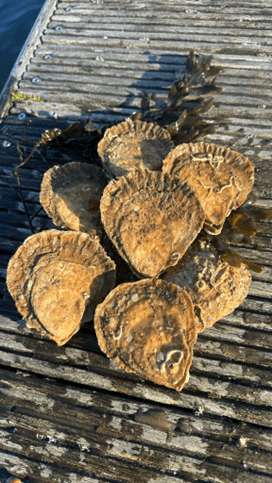
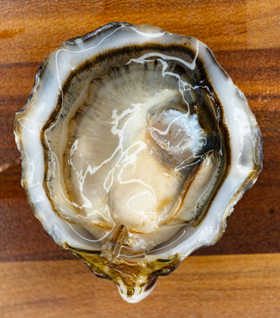
Fig. 2 Farmed native oysters in Scotland (photos courtesy of Dr Tom Ashton)
How can aquaculture be made more sustainable?
Achieving a more sustainable future for aquaculture will require innovation, an appropriate regulatory framework, and the collaborative efforts of governments and businesses working together with local communities.
The role of government
It is the job of governments to strike the right balance between the maintenance of food security and the profitability of businesses on one hand and the protection of ecosystems, animal welfare, employee rights, and food standards on the other. The principal levers available to effect change are legislation, certification and financial incentives to nudge good behaviour. For example, governments license the set-up and operation of aquaculture farms, and by adopting a science-led approach can ensure that ecosystems are protected and critical habits such as mangrove forests and sea grass meadows conserved. Strict limits to nutrient pollution and effluent discharge can be set and enforced through fines. Governments can also offer incentives for good behaviour including the encouragement of certification schemes that promote sustainable practices or by supporting innovations that improve productivity and/or reduce environmental impacts. These goals can be achieved through policy development and by providing public subsidy in the form of tax allowances or targeted research to academia and industry. Governments also have a major role in societal aspects of sustainability through the enforcement of fair labour practices and safe working conditions.
Best practice is to involve all stakeholders in policy development and the decision-making including companies and local communities to ensure that aquaculture benefits are equitably shared.
The role of industry
Making aquaculture farms more sustainable can also make them more productive and profitable, a fact that has not escaped the notice of progressive aquaculture companies. Reducing the Food Conversion Ratio (FCR) of farmed species is a good example. The optimisation of feed ingredients, smart automated feeding regimes and genetic selection are being actively pursued by industry to reduce FCR. There has also been a trend for the shift to diets containing a higher proportion of plants, algae and invertebrates (insect and polychaete) which reduces the utilisation of fish oils and proteins from industrial fishing and in the process protects marine biodiversity. Another trend in net pen farming is to move production units offshore albeit this is not without controversy. Its proponents argue offshore production reduces the degradation of coastal ecosystems and has potential benefits in terms of reduced disease and higher animal welfare. The use of antibiotics and other medicines is being reduced through the development of vaccines, AI-driven health monitoring and the genetic selection of disease resistant strains.
Electric well boats for harvesting provide a more sustainable alternative to traditional vessels. As well as contributing to “net-zero”, electric propulsion is less costly to run and maintain.
Recirculating Aquaculture Systems (RAS) reduce the use of land and water whilst providing highly controlled environments to optimise growing conditions, resulting in better resource management and lower mortalities. Entirely land-based farms for salmon and shrimp are being constructed close to major cities reducing transport costs, spoilage losses and carbon emissions. Carbon dioxide emissions are 47-times lower for transport by sea than air. Investment in technology for the rapid freezing of product soon after harvest enables high quality seafood to be transported in containers long distances by sea replacing air freight, thereby reducing climate impacts and costs.
Eco-certification for seafood that is sustainably produced e.g., by the Aquaculture Stewardship Council (ASC) can attract environmentally conscious consumers, boosting sales and profitability. Companies can also improve traceability and certification through technologies such as block chain.
Shrimp farming in SE Asia - a case study
A recent report by the World Wildlife Fund (WWF) examined the challenges of balancing production with environmental sustainability for shrimp farming in SE Asia and is well worth a read. Shrimp are major internationally traded commodity foods, with whiteleg shrimp and black tiger shrimp making up most of the farmed species. Shrimp farming destroys coastal habitats that represent vital feeding and breeding grounds for wildlife. It also causes water pollution from antibiotic use and high levels of nutrients. Demand for feed ingredients contributes to overfishing. Extensive shrimp farms have much larger pond sizes (up to 20 hectares) than intensive farms (5 to 0.5 hectares) which reduces land use, but at the expense of increased reliance on feed, energy, and water. Organic shrimp farming was calculated to use 1 ha of land, 10,075 m³ of water, and 62 GJ of energy per 1.6 tons of shrimp, compared to 0.44 ha, 2,173 m³, and 30 GJ for intensive farming. More intensive farms are associated with lower breakeven points, better returns on investment and greater overall sustainability than traditional extensive pond culture. Intensive farming methods require “shrimp toilets”, mechanical aeration and acoustic feeding, leading to higher capital costs. Feeding controlled by acoustic sensors results in a lower FCR, i.e. a more efficient use of feed. It has been estimated that a decrease in FCR by just 0.1 units could save 106,000 ha of land, 141 million m³ of water, 468,000 tons of wild fish, and $85-$110 million in Thailand and Vietnam alone. It was concluded that making shrimp more sustainable will require the participation of the entire value chain from feed manufacturers to consumers.
Perspective and Final Thoughts
Sustainable aquaculture practices serve the interests of both industry and governments. For this reason, there are reasons for optimism that progress towards greater sustainability will only accelerate in the years to come. Consumers undoubtedly have an important role to play. They can give preference to products labelled “sustainably farmed” and choose species with high sustainability scores. Food preferences reflect cultural habits which may need to change over time to meet sustainability goals. For example, the UK produces high quality shellfish, but it is mostly exported to continental Europe where its culinary delights are better appreciated. A change of fashion could see more Brits enjoying one of my favourite sea food dishes “Améijous à Bulhão Pato”, whilst contributing to the farming of a star of aquaculture sustainability, the Parlourde clam (Fig. 3).
Similarly, the fish species farmed today were chosen with little thought given to sustainability. For example, gilthead sea bream and European sea bass dominate finfish aquaculture across the Mediterranean. Meagre, also known as Corvina, grow faster, boast a lower FCR, and have a better process yield than bass and bream. Although they taste delicious, meagre have yet to be farmed at scale across southern Europe. The relative market price of wild caught and farmed fish is an important factor in determining the financial viability of farming each species. Overfishing, catch quotas and inflationary pressures on capture fisheries are likely to tip the balance in favour of aquaculture for more species in the future.
The Global South is a treasure trove of natural resources including native fish species with excellent sustainability and good prospects for large scale aquaculture. These include the large, fast growing, high value, plant eating, Tambaqui from Brazil, with its tasty firm white flesh and just the right amount of fat for grilling or a barbecue. These are many other emerging aquaculture species that could well appeal to global markets and contribute to a more sustainable future.
Building resilience in the face of climate change is another important aspect of sustainability which will be the subject of a future blog.
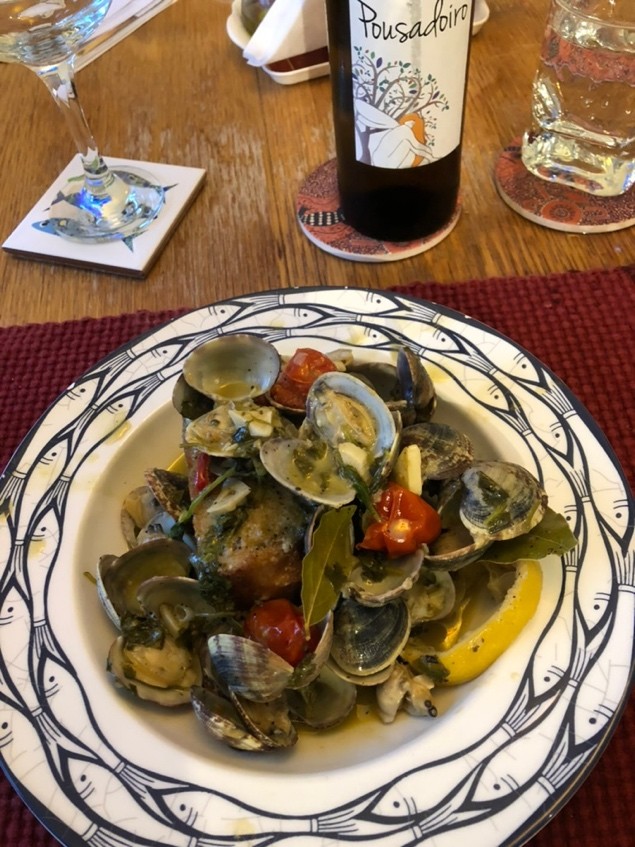
Fig. 3 Clams “Portuguese style” constitutes a healthy, sustainable and delicious choice.